
Constitution World
Constitution World
The U.S. Constitution
School Prayer Constitutional Issues
The debate over school prayer has been shaped by Supreme Court cases, beginning with Engel v. Vitale in the 1960s. This decision declared compulsory school prayer inconsistent with the Establishment Clause, addressing a government-scripted prayer in New York schools. The Court rejected the idea...
Read more →
Eminent Domain Updates
The U.S. Supreme Court has recently influenced how eminent domain is understood and applied. Eminent domain, the power of the government to take private property for public use, often sparks debates over property rights. The Court's decisions significantly shape how these rights are protected or...
Read more →
Impact of Rulings on Adoption Laws
The evolution of same-sex adoption laws has been marked by significant constitutional rulings. From state prohibitions to judicial acknowledgments, key decisions paved the way for the recognition of same-sex parents in family law. The landmark decision in Obergefell v. Hodges in 2015, while...
Read more →
Death Penalty Constitutionality
The death penalty's history in the United States is complex and controversial. Originating from colonial times, capital punishment was initially a common practice imported from Britain. The U.S. Constitution did not explicitly address it, leaving its interpretation to courts and legislators. A...
Read more →Social Media Regulation Challenges
The First Amendment of the U.S. Constitution safeguards speech and press freedoms, protecting individuals from governmental interference in expressing ideas and beliefs. This principle extends to modern digital platforms, where social media companies function similarly to traditional media outlets...
Read more →Constitutionality of Emergencies
Emergency powers have been a contentious issue since the founding of the United States. The Founding Fathers recognized the need for quick, decisive action during crises, but were cautious about granting too much power. This caution is reflected in the Constitution's lack of an explicit emergency...
Read more →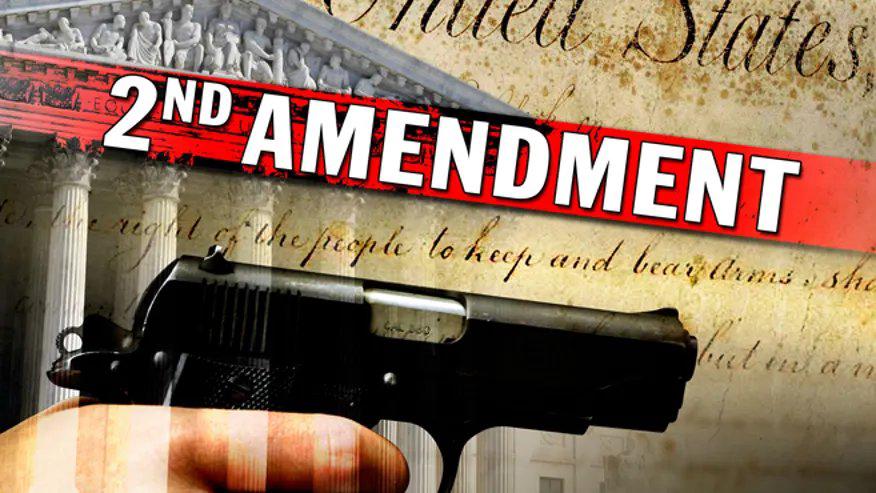
Gun Control Constitutionality
The Second Amendment emerged during an era of wariness towards centralized power. The framers, cautious of potential tyranny, sought to balance power between individuals, states, and the federal government. This amendment developed in a world where individual liberty was seen as a safeguard against...
Read more →
Public Funding for Private Schools
Public funding for private schools began in Milwaukee in the early 1990s when Wisconsin started using public funds for low-income students to attend private schools. This initiative paved the way for educational choice across various states. Initially aimed at providing opportunities for low-income...
Read more →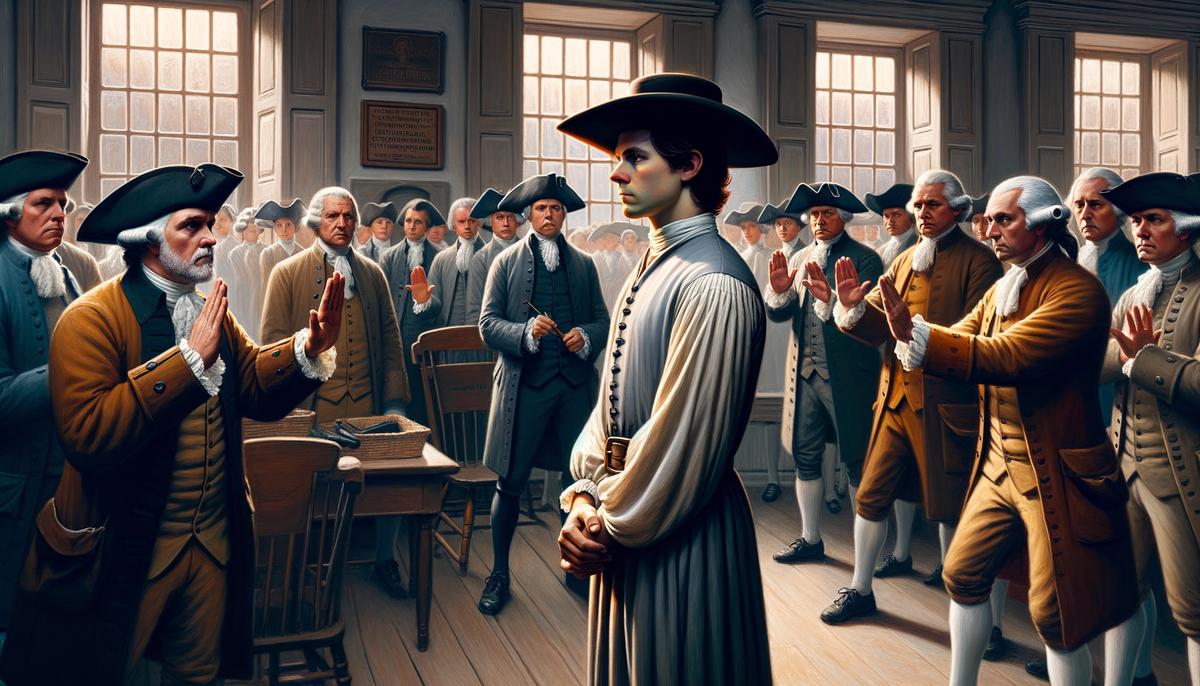
Religious Exemptions vs. Civil Rights
Throughout America's history, religious exemptions have played a distinct role in the country's legal framework. The Quakers' refusal of military duties highlighted early tensions between civic laws and religious beliefs. Lawmakers often chose to provide exemptions through "legislative grace." The...
Read more →State Redistricting Constitutionality
Redistricting, a recurring feature in American politics, has transformed significantly since its inception. The Framers of the Constitution deemed population censuses necessary every decade for fair representation. Initially unregulated, redistricting often reflected political maneuvers, with the...
Read more →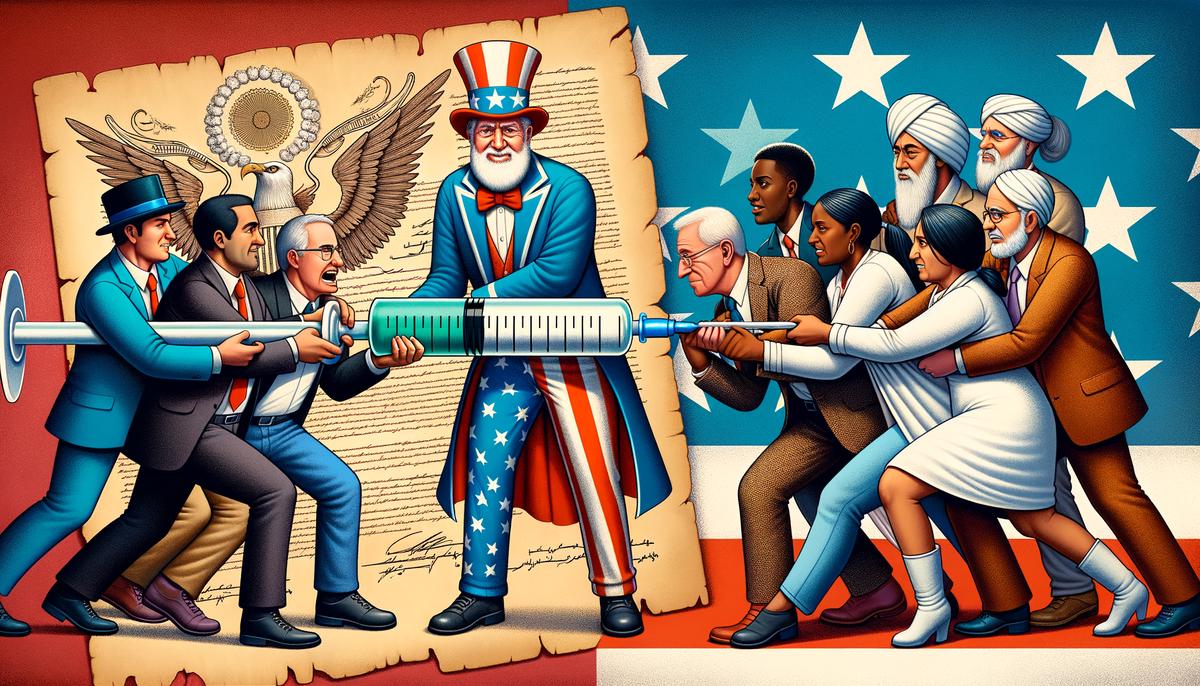
State Pushback on Vaccine Mandates
The Biden administration's federal vaccine mandates have sparked legal debates and state-level resistance. The Occupational Safety and Health Administration (OSHA) was tasked with implementing rules requiring employees in large businesses to either get vaccinated or undergo weekly testing. However,...
Read more →
State Abortion Rights Challenges
In Missouri, Amendment 3's passage has sparked legal challenges. The measure, which protects abortion rights up to fetal viability, contradicts existing abortion bans. This has led to resistance from state lawmakers and anti-abortion groups. The GOP-led Legislature shows little inclination to...
Read more →
First Amendment on Social Media
The Supreme Court has been considering how First Amendment rights apply to social media. In a significant decision, the court treated social media platforms like newspapers, granting them the right to exercise editorial discretion about content. In Moody v. NetChoice , the court clarified that...
Read more →
Tenth Amendment and ACA Challenges
The Affordable Care Act (ACA) is rooted in constitutional principles, primarily the Commerce Clause and the Necessary and Proper Clause. The Commerce Clause grants Congress power to regulate interstate commerce, which the ACA used to justify its individual mandate. Opponents argued this exceeded...
Read more →Supreme Court Gun Rulings
The case of NRA v. Vullo highlighted the relationship between gun rights and free speech. New York's attempt to silence the National Rifle Association's gun advocacy through financial measures was struck down by the Supreme Court. Justice Sonia Sotomayor's unanimous opinion reinforced the...
Read more →
Constitution and Federal Agencies
The Constitution provides the foundation for federal agencies through Article I, Section 8, which grants Congress the power to make laws for the country's welfare. This allows for the creation of agencies to handle specific tasks like regulating workplace safety or air quality. The Necessary and...
Read more →Emoluments Clause Conflicts
The Emoluments Clause, a constitutional provision, protects against foreign influence and domestic bias. It exemplifies the framers' aim to shield the government from personal enrichment and conflicts of interest. The clause is divided into two parts: The Foreign Emoluments Clause: Prohibits...
Read more →
War Powers Clause Post-9/11
The Constitution divides war powers between Congress and the President to safeguard against rash decisions. Congress retains the authority to declare war, while the President holds the role of commander in chief. This balance was established to prevent unchecked executive power over military...
Read more →Constitution and Campaign Finance
The Federal Election Campaign Act of 1974 emerged as an attempt to regulate campaign finances in the wake of the Watergate scandal. It introduced limits on campaign contributions and implemented rules for record-keeping and disclosure. However, challenges led by Sen. James Buckley and Eugene...
Read more →Contract Clause Limits on State Power
The Contract Clause serves as a guardian of contractual agreements while managing the relationship between state power and individual rights. Its journey through American legal history reflects a continuous balancing act between the sanctity of contracts and the evolving needs of society. The...
Read more →