
Constitution World
Constitution World
The U.S. Constitution
Legality of Banning Gas Cars
The principles enshrined in the U.S. Constitution serve as the foundation for evaluating modern legislative actions. Understanding how these principles apply to contemporary issues, such as banning gas cars, is crucial. By examining key constitutional provisions and their implications, we can...
Read more →
Is a National Gas Stove Ban Legal?
The Commerce Clause gives the federal government power to regulate interstate commerce, which includes gas stoves. The EPA can regulate emissions under the Clean Air Act. The CPSC can impose regulations for public health risks. Any federal ban would face legal challenges from industry and states...
Read more →
Repealing the 22nd Amendment
The 22nd Amendment to the United States Constitution addresses the balance between effective leadership and the prevention of concentrated power. This amendment, shaped by historical events and public sentiment, continues to spark debate about its relevance and impact on democratic governance. By...
Read more →
Fifth Amendment and Miranda
The Miranda rights have played a pivotal role in shaping the American criminal justice system since 1966. Rooted in the need to protect individual constitutional rights during police interrogations, these warnings have undergone significant scrutiny and evolution through landmark Supreme Court...
Read more →
21st Amendment and Alcohol Regulation
The 21st Amendment's repeal of Prohibition marked a significant shift in alcohol regulation in the United States. This change from federal to state control led to diverse regulatory frameworks across the country, reflecting local preferences and cultural backgrounds. This discussion examines how...
Read more →
Top 5 Constitution-Protecting Presidents
The United States Constitution guides the nation through change and challenge. Key figures in American history have upheld these constitutional ideals, shaping the country into a constitutional republic rooted in conservative values. George Washington established key presidential precedents that...
Read more →
16th Amendment and Progressive Taxation
The Sixteenth Amendment, ratified in 1913, allowed Congress to levy an income tax without apportioning it among the states. This amendment was born out of financial necessity and political maneuvering. During the Civil War, Congress imposed the first income tax in 1861, initially as a 3% flat tax...
Read more →
17th Amendment and Senate Accountability
The late 19th and early 20th centuries saw state legislatures grappling with corruption and gridlock in senatorial selections. The Progressive Era's call for reform led to the 17th Amendment, which mandated direct election of senators by the people. Originally, the Founding Fathers designed the...
Read more →
14th Amendment and Marriage Equality
The Fourteenth Amendment of the U.S. Constitution has significantly influenced American society, particularly regarding marriage equality. Key Supreme Court cases demonstrate how this amendment has been interpreted to protect fundamental rights and ensure equal treatment under the law. From Loving...
Read more →
Second Amendment and Stand-Your-Ground
The Second Amendment, ratified in 1791, emerged from the post-Revolutionary American landscape. The Founding Fathers, having recently gained independence from British rule, sought to prevent tyranny in their new nation. The Philadelphia Convention of 1787 saw intense debates among figures like...
Read more →
Take Care Clause and Presidential Powers
The Take Care Clause originates in Article II, Section 3 of the U.S. Constitution: " [H]e shall take Care that the Laws be faithfully executed, and shall Commission all the Officers of the United States. " The Constitution's Framers aimed to create a government capable of effective function yet...
Read more →
Separation of Powers and Executive Orders
Executive orders are written directives issued by the President of the United States to federal officials or agencies. While not explicitly mentioned in the Constitution, these orders derive from the executive power granted to the President in Article II. They serve as a tool for managing federal...
Read more →
Privileges and Immunities Clause
The Privileges and Immunities Clause in Article IV, Section 2 of the Constitution aimed to place citizens of each state on an equal footing with others. This clause was a measure to foster national unity and ensure fair treatment. The framers drew inspiration from English common law and the...
Read more →
First Amendment and Digital Censorship
The state action doctrine, established in the Civil Rights Cases of 1883, limits the application of constitutional protections to government actions, not private ones. This principle has significant implications for the First Amendment, primarily restricting its application to governmental conduct....
Read more →
Impeachment Cases and Processes
Article II, Section 4 of the U.S. Constitution outlines impeachment for the President, Vice President, and civil officers for Treason, Bribery, or other high Crimes and Misdemeanors . The framers left "high crimes and misdemeanors" vague, borrowing from England where the House of Commons could...
Read more →
Fourth Amendment and Data Collection
In the 18th century, Britain's use of writs of assistance to search American colonists' properties sparked resentment. These general search warrants allowed customs officials to conduct broad, unspecified searches. James Otis famously argued against these writs in 1761, emphasizing the importance...
Read more →
Challenges to Federal Environmental Regulations
Louisiana's clash with the EPA over 'Cancer Alley' illustrates state defiance of federal environmental justice efforts. The EPA sent a Letter of Concern to Louisiana agencies after community groups filed complaints about racially discriminatory permitting practices. Louisiana Attorney General Jeff...
Read more →
Constitutional Law and Hate Crimes
The First Amendment of the United States Constitution protects free speech, including offensive or hateful speech. This dedication to protecting all forms of expression underscores the belief in a free marketplace of ideas. The intersection of hate speech, hate crimes, and constitutional...
Read more →
Federal Overreach in Immigration
American immigration law shifted from state to federal control after the 1875 Supreme Court decision in Henderson v. Mayor of New York . The Chinese Exclusion Act of 1882 marked Congress's first major restriction on immigration. Subsequent acts like the Immigration Act of 1917 and 1924 National...
Read more →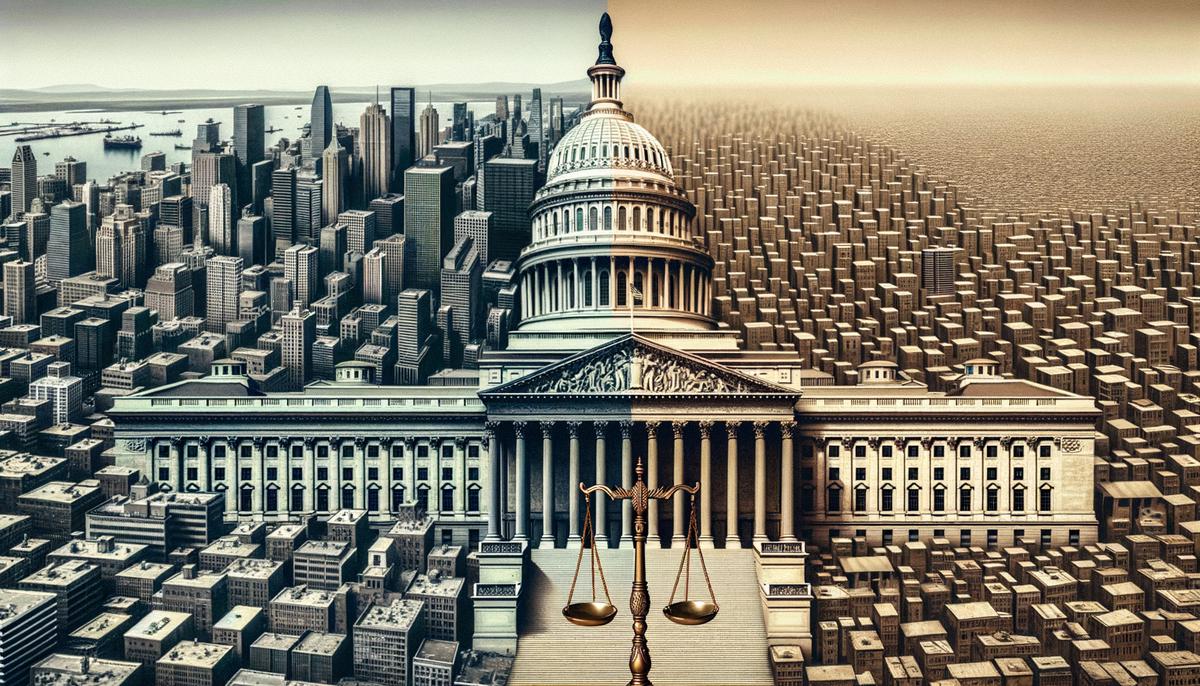
Federalism and Sanctuary Cities
Sanctuary cities are localities that limit cooperation with federal immigration enforcement. These cities often decline detainer requests from ICE and may prohibit local police from inquiring about a person's immigration status during routine stops. The rationale behind these policies centers on...
Read more →